
If you’ve found a material that you think may contain asbestos, it’s natural to be concerned and want a clear answer as quickly as possible. Whether it’s an old garage roof, textured coating, ceiling tile, or insulation board, one of the most common questions homeowners ask is: “How do I know if it actually contains asbestos?”
Unfortunately, asbestos cannot be accurately identified by sight alone. Many asbestos-containing materials look almost identical to modern, asbestos-free alternatives, meaning guessing can be risky.
That’s where asbestos sampling comes in.
Asbestos sampling involves taking a small sample from a suspected material and sending it to a laboratory for analysis. The results will confirm whether asbestos is present, helping property owners, buyers, landlords, and businesses understand exactly what they’re dealing with and what, if any, actions need to be taken.
In this guide, we’ll explain what asbestos sampling is, what happens during the process, and what happens once your sample has been tested.
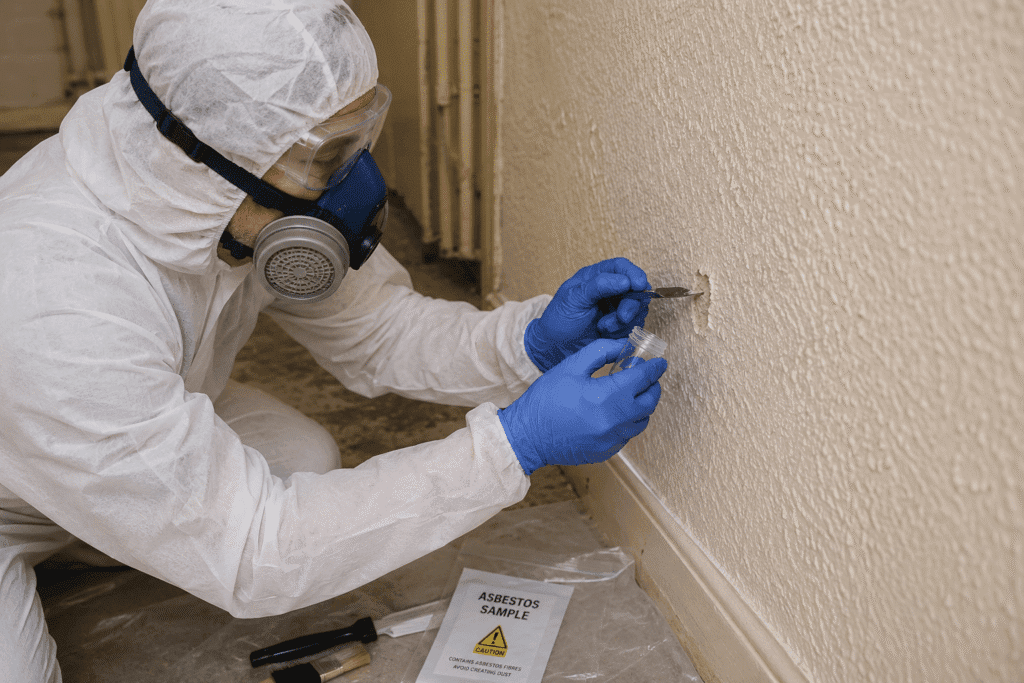
What is Asbestos Sampling?
Asbestos sampling is the process of taking a small sample from a material that is suspected to contain asbestos and sending it to a laboratory for testing.
The aim is simple: to find out whether asbestos is present. While some materials can raise suspicion due to their age, appearance, or location, asbestos can’t always be reliably identified by just looking at it. Many asbestos-containing materials look almost identical to modern-day alternatives, making laboratory analysis the only reliable way to 100% confirm the presence of asbestos.
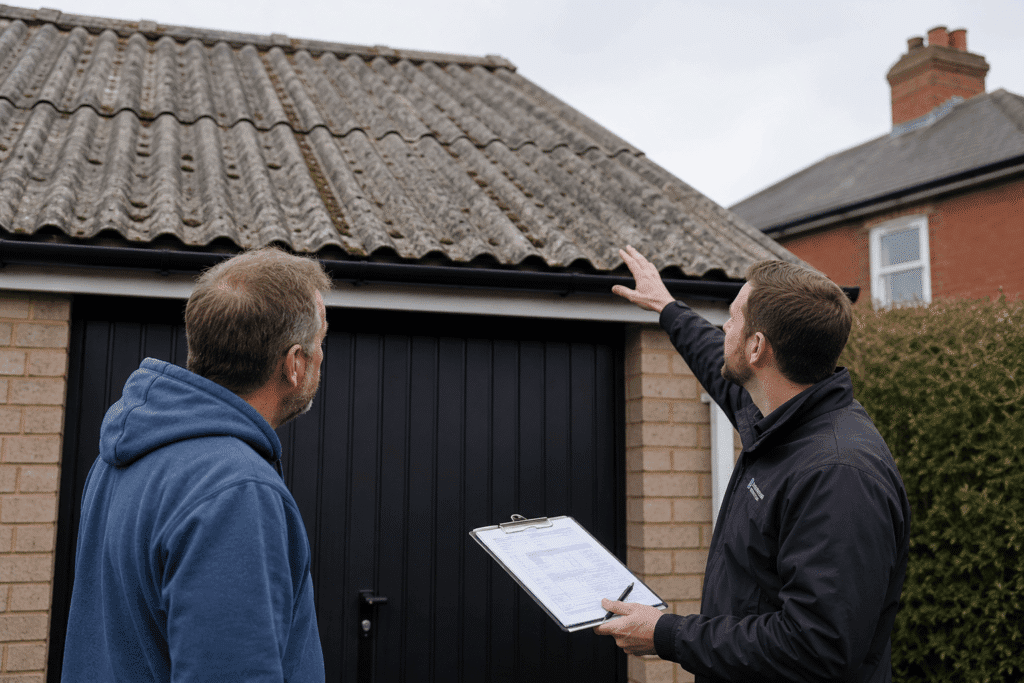
Sampling is usually carried out when asbestos is suspected in a property, whether in an old garage roof, Artex coating, insulation board or floor tiles. It may form part of an asbestos survey, or be arranged separately if a particular material causes concern.
Once tested, the results will confirm whether asbestos is present, the type of asbestos, and help determine the most appropriate next steps. In most cases, this can involve monitoring the material, managing it, or arranging for asbestos removal if necessary.
How is Asbestos Sampling Carried Out?
Asbestos sampling must always be carried out by a trained professional. A licensed asbestos specialist can take a sample safely while reducing the risk of asbestos fibres becoming airborne.
Although the exact approach varies depending on the material and where it is located, asbestos sampling typically follows these steps:
1. INSPECTION OF THE SUSPECTED MATERIAL
The asbestos surveyor will first inspect the material and assess whether it could potentially contain asbestos. Factors such as the age of the building, the material type, and its condition will all be considered.
2. PREPARING THE AREA
Before a sample is taken, the surveyor will prepare the surrounding area to reduce the risk of fibre release. They will put suitable control measures in place, such as limiting access, laying protective sheeting, and using controlled sampling methods to keep fibre release to a minimum.
The surveyor will also wear personal protective equipment (PPE) and follow approved procedures to ensure the sample is collected safely and responsibly.
3. TAKING THE SAMPLE
A small sample of the suspected material is taken. The area is dampened first to reduce dust, then a tiny piece is cut or scraped off using specialist tools and placed in double-sealed ziplock bags. Only a small amount is required for laboratory testing.
4. SEALING THE SAMPLE AREA
Once the sample has been taken, the exposed area will usually be sealed or repaired. This helps to prevent any fibres from being released, and leaves the material in a safe condition.
5. LABORATORY TESTING
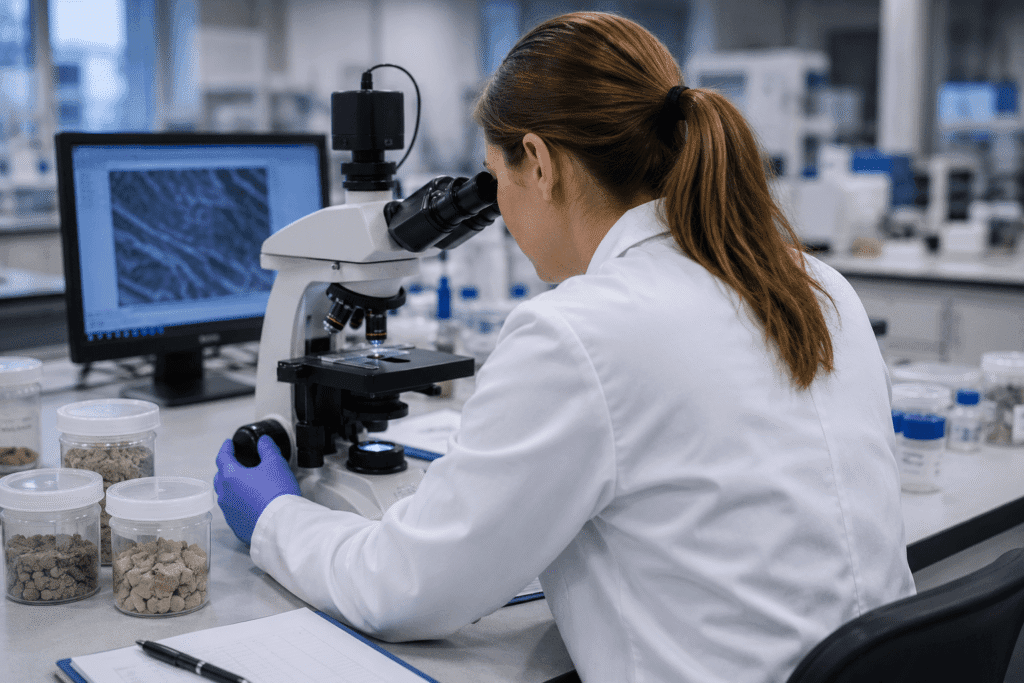
The sample is placed in a sealed container and sent to a UKAS-accredited laboratory for testing and analysis. Specialists will examine the sample under controlled conditions to determine whether asbestos fibres are present.
6. ANALYSIS RESULTS
Once UKAS asbestos testing is complete, a report will confirm whether the material contains asbestos. If asbestos is present, the report may also provide recommendations on how the material should be managed moving forward.
How Long Does Asbestos Sampling Take?
Asbestos sampling can be a quick process. The duration of the sampling will depend on the number of materials being tested, their location, and how easily they can be accessed.
If you’re having a single material tested, sampling can take as little as 15 to 30 minutes. However, if sampling is being carried out as part of a larger asbestos survey, the visit could take anywhere from one hour to several hours, depending on the size and complexity of the project.
After the sample has been collected, it will be sent to a UKAS-accredited laboratory for testing. Results tend to be available within 24-48 hours, although faster turnaround times may be available if required.
Can Anyone Take an Asbestos Sample?
Technically, there are no legal requirements that stop homeowners from taking samples from their own property. However, it’s generally not recommended because of the serious health risks and hazards involved.
The main concern is that disturbing an asbestos-containing material can easily release fibres into the air if not handled properly. Without the right knowledge, equipment, and safety procedures, there is a higher risk of contaminating the surrounding area and increasing potential exposure.
Professional asbestos surveyors are trained to obtain samples safely and effectively with minimal disturbance to the material. They also know which materials are likely to contain asbestos and the best methods of obtaining a sample for accurate laboratory testing.
Using a qualified asbestos professional ensures the sample is taken safely, the results are accurate, and any recommendations reflect a thorough assessment of the material and its condition.
If you suspect asbestos, do not sand, drill or break the material – leave it undisturbed and speak to a professional.
When is Asbestos Sampling Needed?
Asbestos sampling is carried out whenever there is uncertainty over whether a material contains asbestos. Because many asbestos-containing materials look nearly identical to non-asbestos alternatives, laboratory testing is often the only way to know for sure.
Sampling is recommended in a variety of situations, including:
- During the purchase of an older property
- Before refurbishment or renovation projects
- Before demolition work takes place
- When an asbestos-containing material has become damaged or deteriorated
- As part of routine asbestos management
- When the presence of asbestos cannot be confirmed from existing records
In many cases, asbestos sampling forms part of an asbestos survey. The type of survey required will depend on your property, its intended use, and any planned work.
ASBESTOS MANAGEMENT SURVEY
An asbestos management survey involves locating and assessing asbestos-containing materials that could be disturbed during normal occupation, maintenance, or day-to-day activities.
During the survey, samples may be taken from suspected materials to confirm whether asbestos is present. The findings can help property owners and duty holders to understand where the asbestos is located, its condition, and how it should be managed safely.
If you’re responsible for a workplace or rental property, accurate sampling supports your legal duty to manage asbestos.
REFURBISHMENT AND DEMOLITION SURVEY
A refurbishment and demolition survey (R&D) is required before any major refurbishment, structural alterations, or demolition work is carried out.
Because asbestos can be hidden behind walls, ceilings, and floors, this type of survey is far more intrusive than other types of surveys. Samples are taken from a variety of materials to identify any asbestos that could be disturbed during planned work.
RE-INSPECTION SURVEY
If asbestos-containing materials have previously been identified and remain in a building, regular re-inspections may be required.
The purpose of a re-inspection survey is to assess the condition of known asbestos-containing materials and determine whether they remain in a safe and manageable condition. Additional sampling may be required if there is uncertainty about a material or if its condition has deteriorated.
HOMEBUYER SURVEY
Many buyers of older homes built before 2000 choose to arrange asbestos testing or a homebuyer asbestos survey for additional peace of mind.
Sampling can confirm whether suspected materials contain asbestos before you exchange contracts. This helps you understand any future need for management, repairs, or removal.
What Happens After Asbestos Sampling?
Once the sample has been collected, it is sent to a UKAS-accredited laboratory for analysis. A specialist will examine the sample to determine whether asbestos fibres are present, and, if so, identify the type of asbestos within the sample.
The results are then compiled into a report, confirming:
- Whether asbestos is present
- Type of asbestos identified
- Recommendations for managing the material safely
If the sample doesn’t contain asbestos, no further action is usually required for that material.
If asbestos is identified, the next steps will depend on several factors, including the type of material, its condition, its location, and the likelihood of it being disturbed. In most cases, asbestos-containing materials can be safely managed in place and monitored over time.
Asbestos removal is not always necessary. If the material is in good condition and is unlikely to be disturbed, a suitable management plan may be all that is required. However, if the material is damaged, deteriorating, or likely to be affected by future works, repair, encapsulation, or removal may be needed.
The most important benefit of asbestos sampling is certainty. Rather than relying on assumptions, having the material tested provides clear information that allows property owners, buyers, landlords, and duty holders to make informed decisions about how the material should be managed moving forward.
Is Asbestos Sampling Worth It?
Asbestos sampling is the only reliable way to confirm if a material contains asbestos. Laboratory testing gives you clear, written results so you can make informed decisions about your property.
Whether you’re planning refurbishment work, purchasing an older building, managing a commercial property, or simply concerned about a suspected material, asbestos sampling can help identify any potential risks and establish the most appropriate course of action.
Importantly, finding asbestos doesn’t automatically mean removal is required. In many cases, asbestos-containing materials can be safely managed in place when they remain in good condition and are unlikely to be disturbed.
Need Asbestos Sampling or Advice?
If you suspect a material within your property may contain asbestos, it’s important to seek professional advice before carrying out any work.
Smart Asbestos provides specialist asbestos services for residential, commercial, and industrial properties across Nottingham and the surrounding areas, including asbestos sampling, asbestos testing, surveys, removal, disposal, and asbestos management support.
Whether you need a sample tested, an asbestos survey carried out, or guidance on the next appropriate steps, our experienced team can help you identify potential risks, understand your options, and manage asbestos safely and responsibly.